Eastern Costa del Sol
Coves, cliffs, caves and the coast's most famous viewpoint.
Key points
- East of the capital the coast is quieter: Rincón de la Victoria, Torre del Mar, Torrox and Nerja.
- Nerja has the Balcón de Europa, Burriana beach and one of the most spectacular caves in Spain.
- The Maro-Cerro Gordo cliffs are a protected area ideal for kayaking and snorkelling.
- In Rincón you can visit the Cueva del Tesoro, a cave formed by the sea.
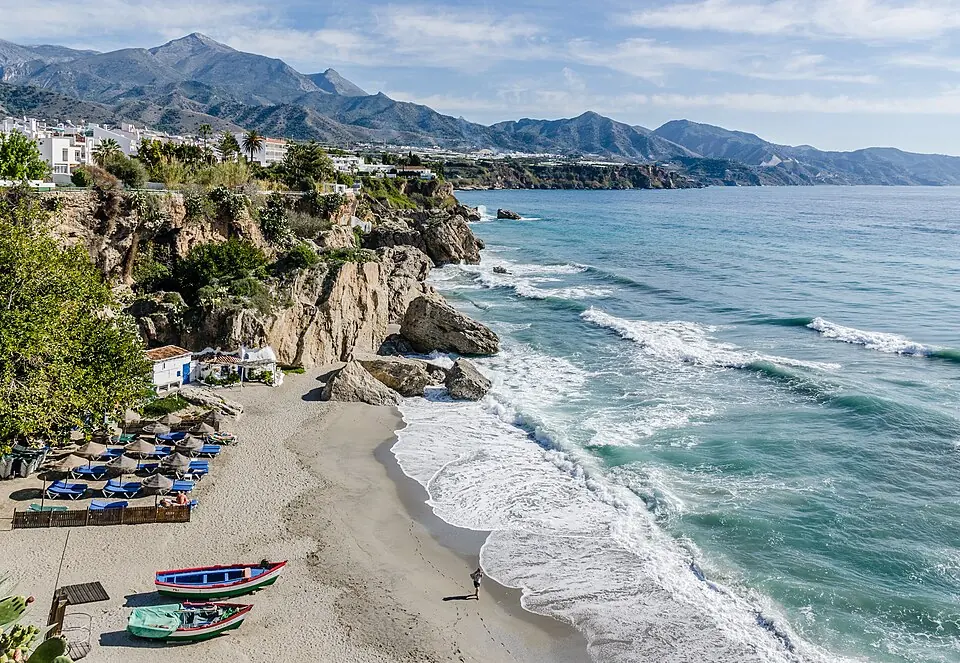
Rincón de la Victoria
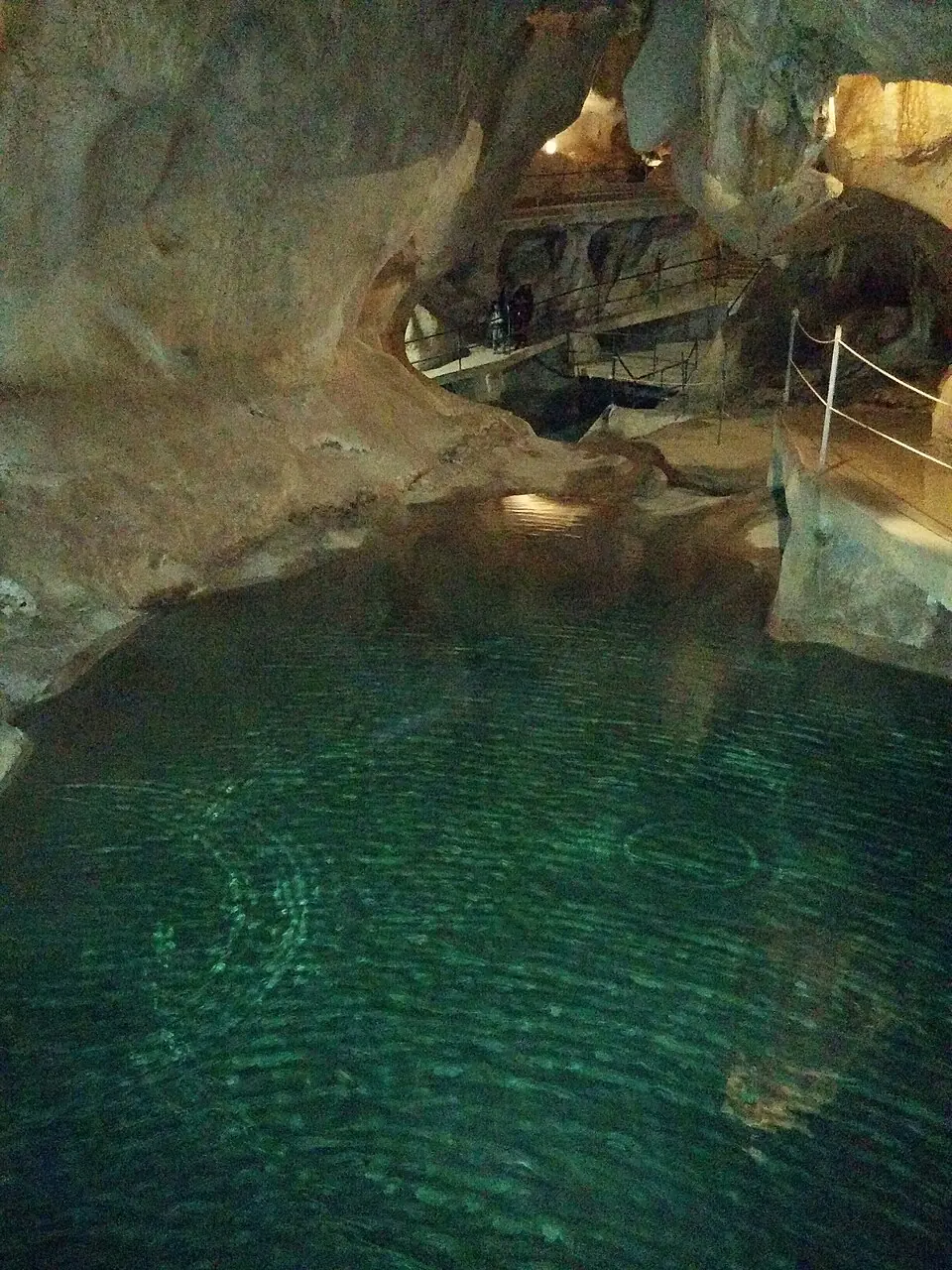
Just 13 km from Málaga, Rincón de la Victoria is famous for its boquerones victorianos (fried anchovies) and a coastal path that runs along the sea through tunnels of the old railway. Its great treasure is the Cueva del Tesoro, a cave formed under the sea and now on dry land, with legends of a hidden Almoravid treasure.
Torre del Mar and Torrox
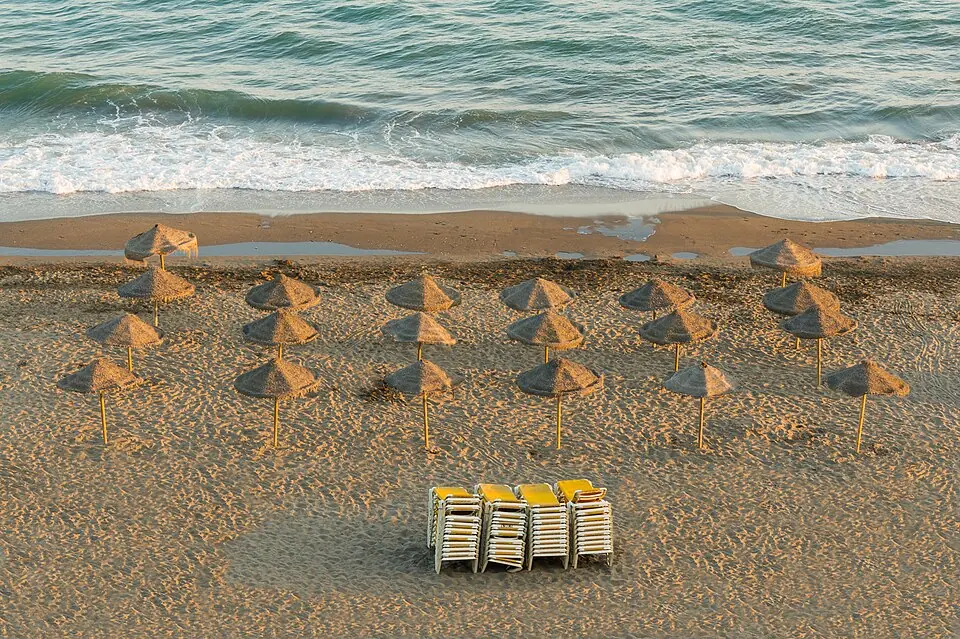
Torre del Mar, the beach of Vélez-Málaga, has a lively promenade, plenty of beach bars and a lighthouse near the old sugar-mill chimney, a reminder of the sugar cane grown here for centuries. Torrox, further east, boasts one of the mildest climates in Europe and every December celebrates its Migas Day.
Nerja
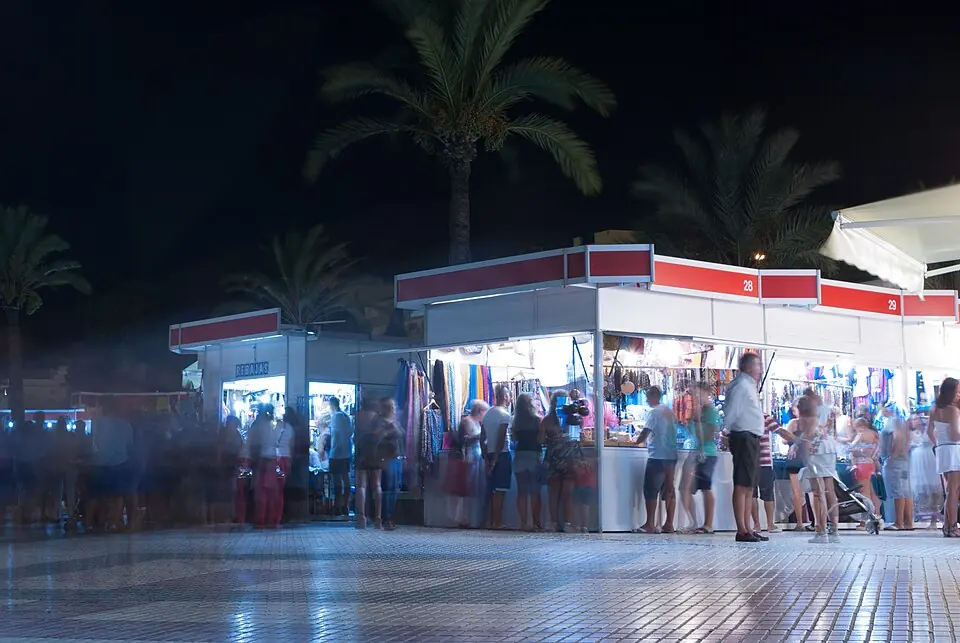
Nerja is the jewel of the eastern coast. The Balcón de Europa, a viewpoint on a headland, owes its name, according to tradition, to King Alfonso XII. Below it lie coves and beaches: Calahonda, El Salón, Carabeo and the popular Burriana, with beach bars and paella.
The Nerja Cave
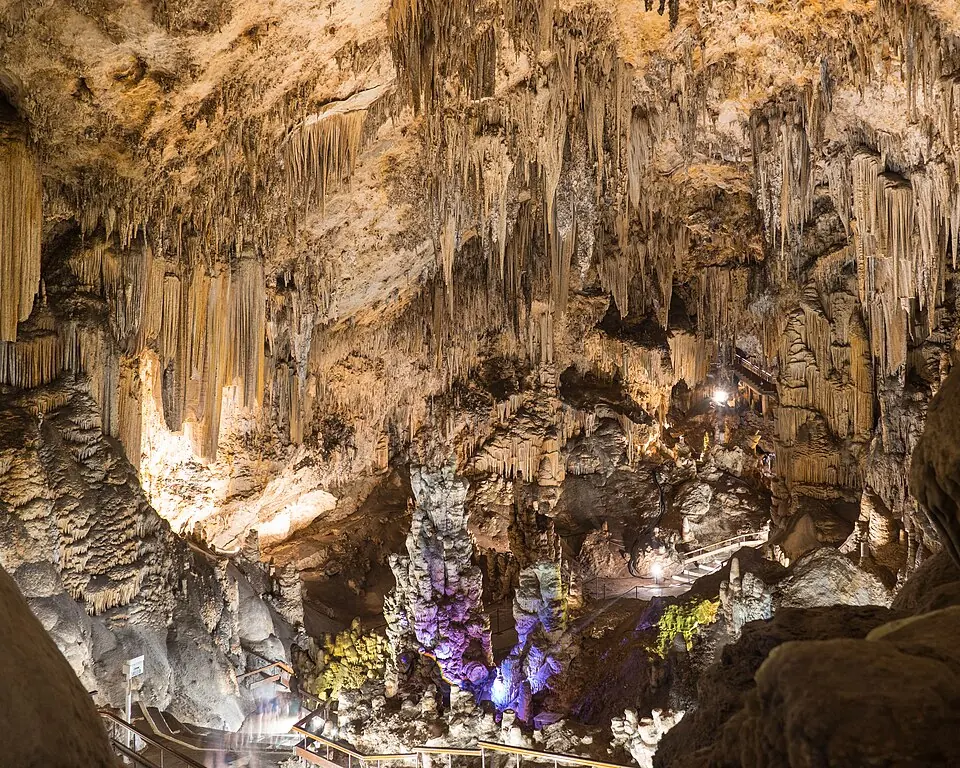
Discovered in 1959 by five young men, the Nerja Cave has gigantic chambers, formations such as the great column in the Cataclysm Hall and Palaeolithic cave paintings. In summer one of its halls hosts a music festival.
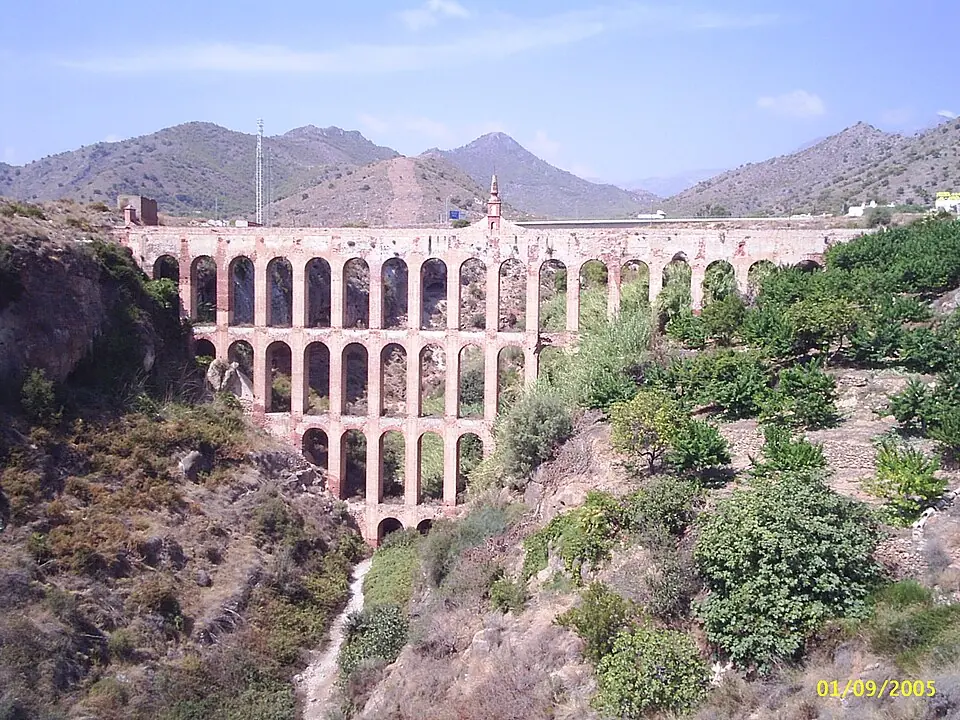
- Águila AqueductA 19th-century brick aqueduct with stacked arches near Maro.
- Río ChíllarA hike walking up the riverbed to the narrow gorges known as "cahorros".
- FrigilianaSix kilometres from Nerja, the most visited Moorish village in the Axarquía.
Maro and its cliffs
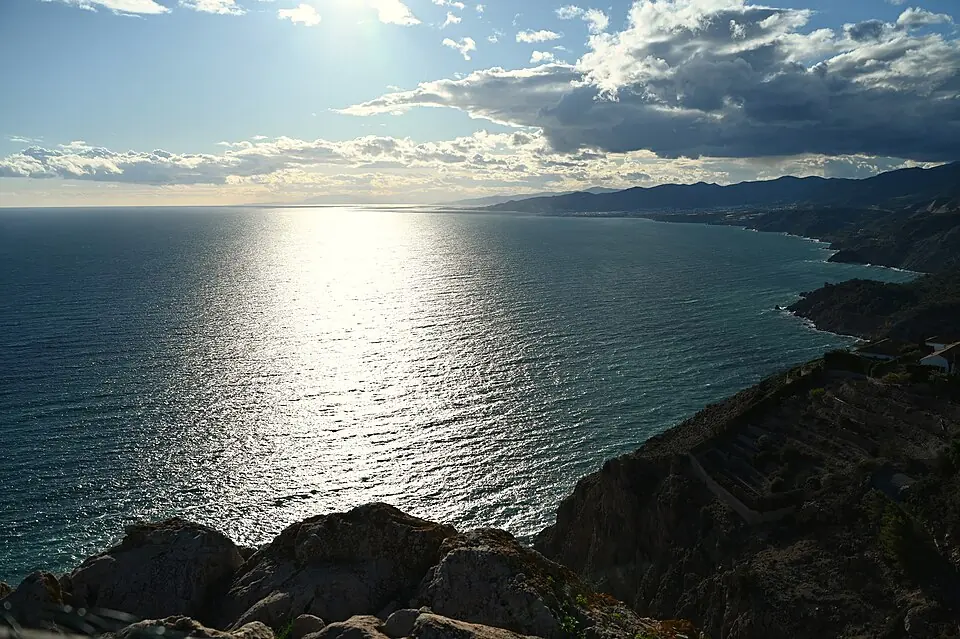
Between Nerja and the border with Granada lies the Maro-Cerro Gordo Cliffs Natural Area: walls above the sea, watchtowers and coves such as Maro beach or El Cañuelo, with crystal-clear water. The best way to explore it is by kayak or paddleboard, with guided trips from Maro beach.
Access to the coves in summer
Some Maro coves restrict car access in high season and work with car parks and shuttle buses. Check Nerja Town Hall's rules before you go.