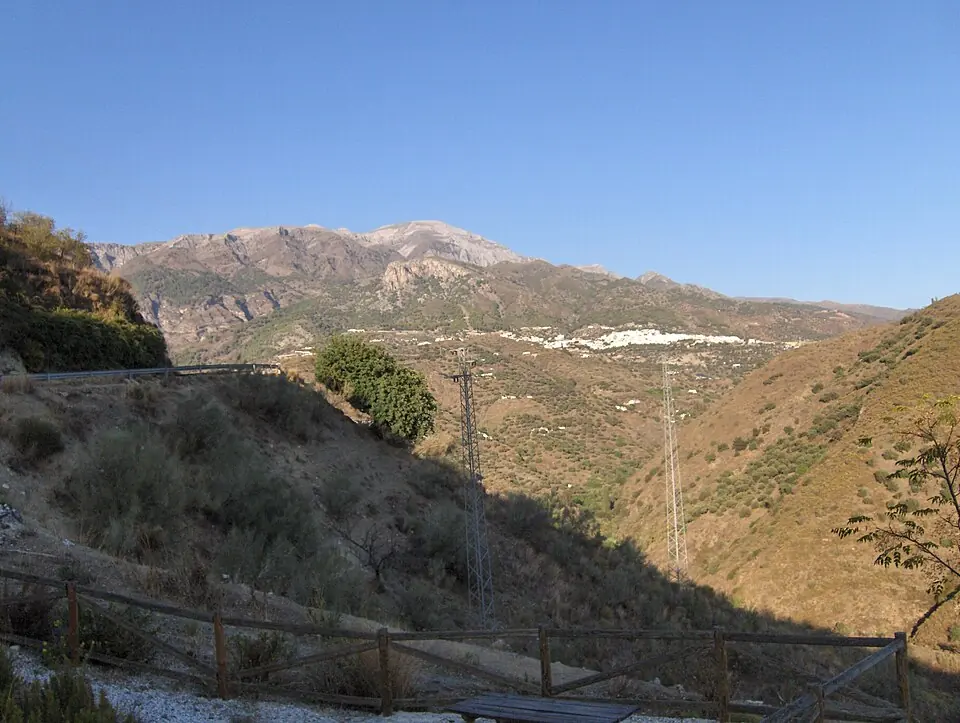
The Axarquía is Málaga's eastern district: 31 municipalities between the coast and the Tejeda and Almijara mountains.
Its white villages keep their Moorish street plan: Frigiliana, Cómpeta, Comares, Sayalonga, Árchez…
A land of raisins and Muscatel: its traditional raisin-making system is recognised by the FAO.
Here rises the province's highest peak, La Maroma, at over 2,000 metres.
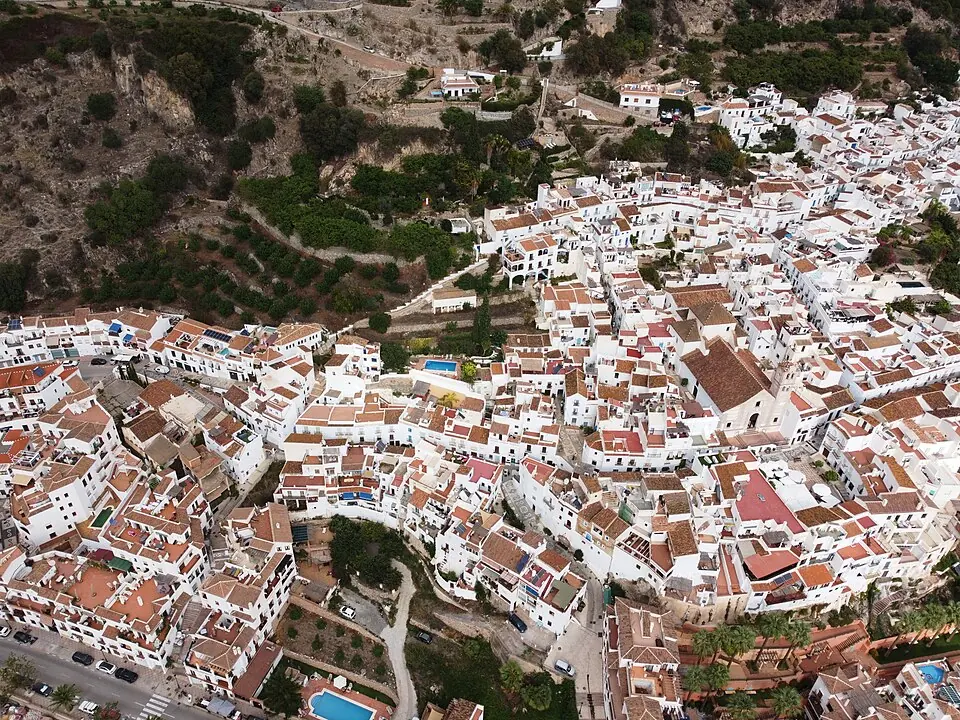
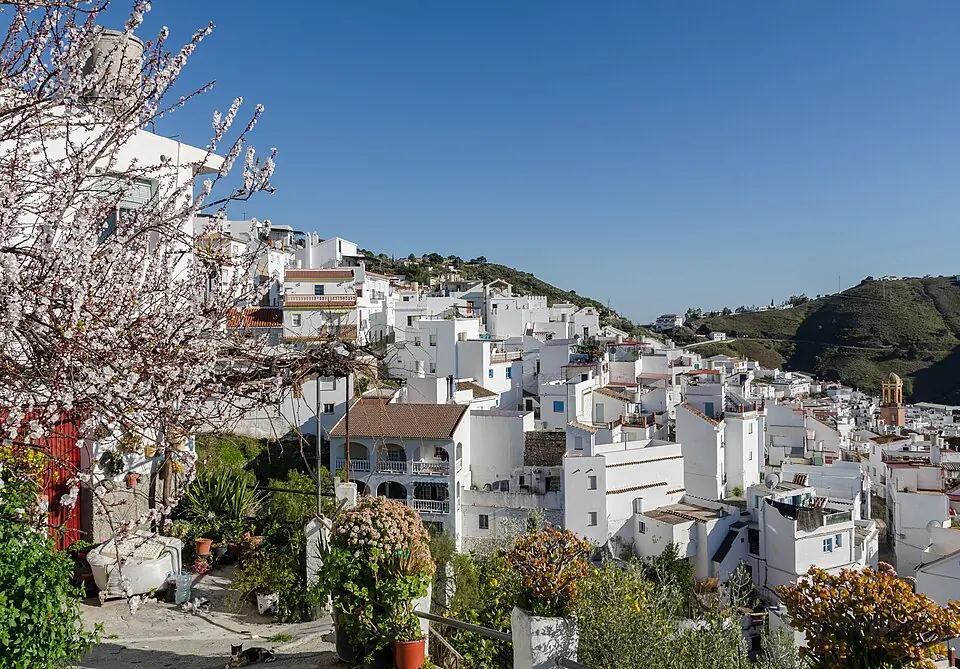
Frigiliana, the village of white streets and stairways in the Axarquía. Photo: Jorge Saturno · CC BY 4.0 · Wikimedia Commons
The prettiest villages of the Axarquía
Frigiliana
6 km from Nerja
What to see
The Moorish-Mudéjar quarter, the ceramic plaques telling the story of the 1569 revolt and the cane-honey mill.
When
The Frigiliana Three Cultures Festival in late August.
Cómpeta
Sierra Almijara
What to see
Plaza Almijara and the church's Mudéjar tower; Muscatel wineries.
When
Wine Night, every 15 August.
Comares
"The balcony of the Axarquía"
What to see
A hilltop village with tiles guiding you through its streets and views down to the sea.
Vélez-Málaga
District capital
What to see
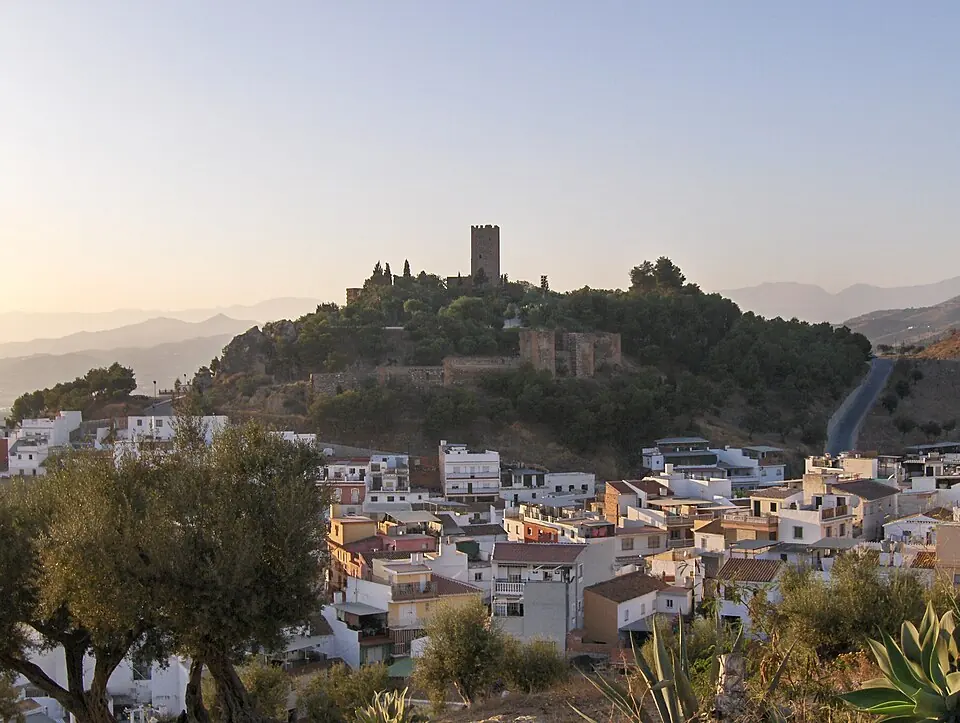
The fortress, the church of Santa María and the old Villa quarter; on the coast, Torre del Mar.
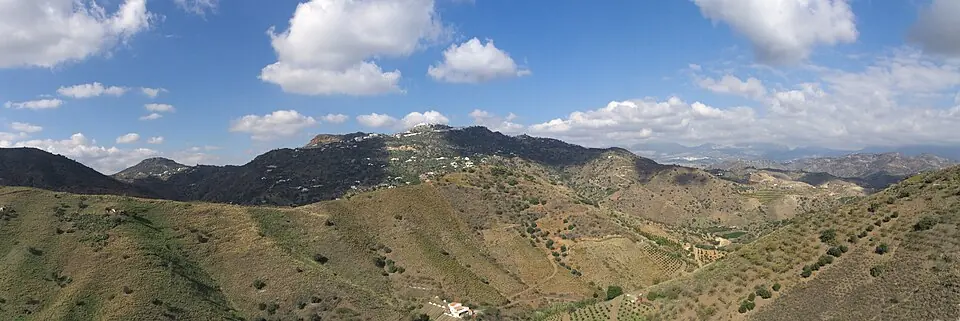
Cómpeta among Muscatel vineyards. Photo: Tuxyso · CC BY-SA 3.0 · Wikimedia CommonsComares, perched on top of a hill. Photo: Ingo Mehling · CC BY-SA 4.0 · Wikimedia Commons
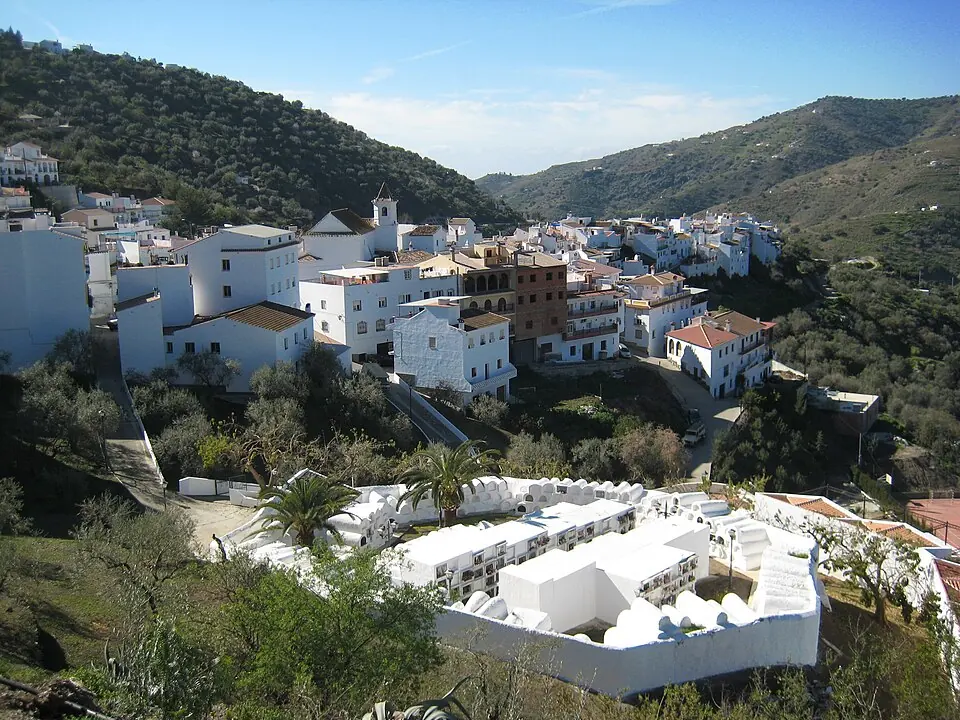
SayalongaFamous for its round cemetery and its loquats, celebrated with a spring festival.
Canillas de AceitunoStarting point for the climb to La Maroma (about 2,070 m), the roof of the province.
Árchez and SalaresAlmohad minarets turned into bell towers, gems of Mudéjar art.
MacharaviayaHome of the Gálvez family, with their pantheon and the story of its playing-card factory.
El BorgeOne of the great raisin villages, with its Raisin Day in September.
Riogordo and PerianaRiogordo's Passion play at Easter and Periana's verdial olive oil.
Sayalonga among loquat orchards. Photo: Cayetano · CC BY-SA 2.0 · Wikimedia CommonsCanillas de Aceituno at the foot of La Maroma. Photo: Tyk · CC BY-SA 3.0 · Wikimedia Commons
Raisins, Muscatel and tropical fruit
On the Axarquía's slopes, Muscatel grapes are dried in the sun on paseros, south-facing drying beds. This system of producing Málaga raisins has been designated a Globally Important Agricultural Heritage System by the FAO. The same grape makes the wines of the Málaga and Sierras de Málaga designations of origin.
In the lower valleys around La Viñuela reservoir, the subtropical climate allows mangoes and avocados to grow, and they have changed the landscape in recent decades.
Nature and hiking
The north of the district is part of the Sierras de Tejeda, Almijara y Alhama Natural Park, shared with Granada. The best-known hikes climb La Maroma from Canillas de Aceituno or follow the Chíllar river from Nerja.
The fortress of Vélez-Málaga, capital of the Axarquía. Photo: Tyk · CC BY-SA 3.0 · Wikimedia Commons
A day trip through the Axarquía
NerjaBreakfast facing the Balcón de Europa.
FrigilianaWander the Moorish quarter early, before the heat.
CómpetaLunch and a visit to a Muscatel winery.
ComaresSunset from the district's highest viewpoint.